Recall postcards, eye health guides, lens price lists and back-to-school flyers
Independent opticians print more recall postcards than anything else, then folded DL guides on eye conditions and lens options, a laminated price list for the dispensing desk and seasonal A5 flyers for children's tests and sunglasses. This page shows what to print for each, today's live prices, sample layouts and the GOC and advertising points to check before you print.
Most of an optician's printed marketing goes to people who are already patients. The test is due, the contact lenses need a check, the child has started school. Getting that reminder into the right hands at the right time keeps the diary full far more cheaply than chasing new customers.
Recall postcards
Posted or handed over when a sight test or contact lens check falls due, usually at one or two years. A postcard on the doormat with the patient's name and 'your eye test is due' gets acted on more often than an email that sinks in an inbox.
Eye health guides
Glaucoma, cataracts, macular degeneration, dry eye, diabetes and the eyes, floaters and flashes. Optometrists hand these over after spotting something at a test, so the patient goes home with the facts rather than a half-remembered conversation.
Lens and coating explainers
Single vision against varifocals, thinner lenses, anti-reflection, blue-light filters, photochromic and polarised lenses. A clear guide at the dispensing desk helps patients understand what they are paying for and why options cost what they do.
Price lists and packages
A laminated sheet showing frame bands, lens prices and any glasses packages you run. It sits on the dispensing desk and answers the cost question before the patient has to ask it.
Children's eye tests
Back-to-school flyers for nurseries, primary schools and parents' noticeboards, explaining that NHS sight tests are free for under-16s and how to book. Late August and September are when parents think about it.
Home visits
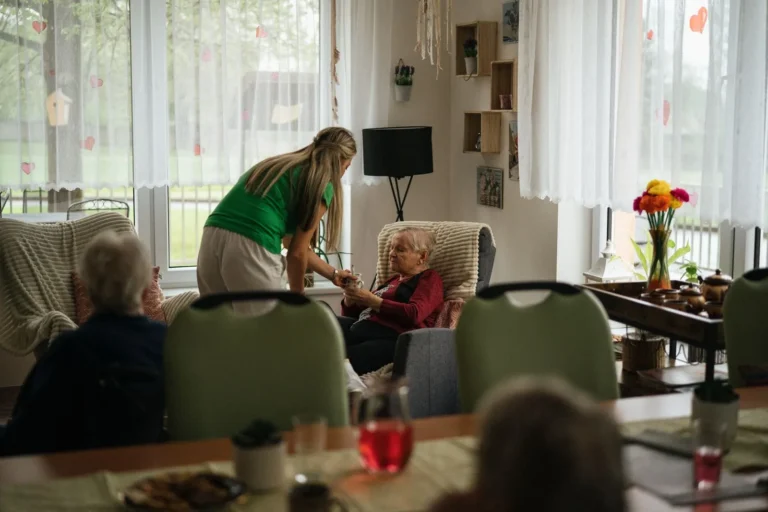
If you offer domiciliary eye care, a calm, large-print leaflet for care homes, sheltered housing, GP surgeries and family carers, explaining who qualifies and what happens at a home visit.
Contact lens and specialist clinics
Dry eye clinics, myopia management for children, contact lens trials and specialist fitting. Short DL flyers at the desk and in the frame displays tell existing patients you offer them.
Recommended leaflets for opticians
What we would print for an independent practice. The 'from' price is today's live price for the lowest-cost options; the example line is a real configuration that suits the job.
A5 is large enough to read without glasses on the doormat, which matters for your audience. One side carries the reminder and the patient's name or a write-in panel; the other side, the address and stamp area.
Six panels suit a condition guide: what it is, symptoms, who is at risk, how it is monitored, treatment and when to come back. DL fits the rack and a jacket pocket.
Handled by every patient choosing glasses. Matt lamination survives being slid across the desk all day and does not reflect the bright lighting around frame displays.
For children's tests in September, prescription sunglasses in spring and opening announcements. Light enough to drop through doors and leave at schools in volume.
2,000 postcards suits a practice recalling around 150 to 170 patients a month. Leave the front design date-free so one run lasts the year.
Saver speed, about 11 working days for the slowest item. Prices are the live Saver prices for exactly these options. Order each item from its own page; one delivery charge covers the basket.
Each condition is its own design and its own line. Swap in macular degeneration or diabetic eye disease to match the patients you see most.
Saver speed, about 7 working days for the slowest item. Prices are the live Saver prices for exactly these options. Order each item from its own page; one delivery charge covers the basket.
Ask schools before sending flyers home in book bags; many will put them on a noticeboard or in a newsletter instead.
Saver speed, about 6 working days for the slowest item. Prices are the live Saver prices for exactly these options. Order each item from its own page; one delivery charge covers the basket.
Three layouts we drew for invented practices. Optical print has an audience that often cannot read small type well, so each layout uses large headings, short lines and plenty of contrast.
These are sample designs we made to show layout and wording. The business names, numbers and addresses are invented.
Sample design
CClearviewOpticians
Your eye test is due
Two years go quickly. A test checks your eye health, not only your glasses.
Call 0161 496 0215 to book
Front
Good to know
NHS tests free for under-16s and over-60s
Late appointment on Thursdays
Bring your current glasses
Other groups also qualify for a free NHS test: ask us.
Sample design: invented practice.
Back
Sample: Clearview Opticians recall postcard
A5 postcard, 350gsm silk card, both sides
Front: one message in large type that a patient can read from arm's length without their glasses.
Back: the questions people ring about, answered before they ring: cost, times and what to bring.
Leave a clear area on the back for the address label and stamp if you post them.
Lines that suit opticians: practical, specific and honest about what is free and what is not. Replace the bracketed parts.
Headlines
Your eye test is due
Can they see the board?
Varifocals explained in five minutes
Dry, gritty eyes? We run a dry eye clinic
Eye tests at home if you cannot get out
A test checks your eye health, not only your glasses
Body text
[Practice] is an independent optician on [street], run by [name], an optometrist who has tested eyes in [town] for [number] years. Every test includes a check of the health of your eyes as well as your prescription, and we explain what we find in plain words. NHS tests are available if you qualify; ask us and we will check for you.
If you find it hard to get to the practice because of illness or disability, we can test your eyes at home or in your care home. We bring the equipment, take our time and can help you choose glasses on the same visit. Call [number] and ask about home visits.
Calls to action
Call [number] to book your test
Ask at the desk about lens options
Scan the code to choose a time online
Say 'free NHS eye test if you qualify' rather than 'free eye tests' unless the test really is free for everyone.
Show a 'from' price for glasses only if a patient can buy a complete pair at that price, and say what lenses it includes.
When, where and how many
Opticians post or hand most leaflets to existing patients, and push for new ones at two points in the year: back to school and the run-up to summer.
Late August and September are peak for children's tests. January brings people using new-year benefits and insurance allowances; spring brings prescription sunglasses.
Where they go
Recall postcards by post or handed over at collection. Guides in the test room and at the dispensing desk. School flyers on noticeboards and in newsletters by agreement. Home visit leaflets at GP surgeries, care homes, pharmacies and sheltered housing offices.
How many
Recall cards: count the patients due each month and multiply by twelve. A practice testing 40 people a week will recall roughly 2,000 a year. Condition guides: 250 per title lasts most single-room practices a year. School flyers: 1,000 to 2,500 for schools and doors within a mile.
When to print
School material by early August so it can go out before term starts. Recall cards whenever stock is low: keep them date-free so one run lasts. Allow the Saver working days shown on the product page plus delivery, and a week for a school to agree to circulate a flyer.
What response to expect
Recall postcards to existing patients are the best-performing print an optician sends; many practices see a sizeable share of recalled patients book, and a second card a month later lifts it further. Door-dropped flyers to people who are not yet patients bring far fewer responses, typically a few per thousand homes.
Paper, size and finish for opticians
Your readers include people with poor sight by definition, so legibility beats decoration. Large type, strong contrast and no glare.
Job
Size
Paper
Finish
Why
Recall postcards
A5
350gsm silk card
None
Large type fits, survives the post, prints the patient label cleanly.
Eye health guides
A4 folded to DL
250gsm silk
Roll fold
Six panels for a full condition guide; silk avoids glare under bright lights.
Desk price list
A5
350gsm silk card
Matt laminated both sides
Handled constantly, wipe-clean, no reflection.
School and seasonal flyers
A5
170gsm silk
None
Low cost for volume, easy to pin on a noticeboard.
Home visit leaflet
A4 folded to A5
170gsm silk
Half fold
Room for 14pt large print and a clear eligibility panel.
Use 12pt or larger for anything aimed at older patients and 14pt for large-print versions. Avoid light grey text, thin script fonts and text printed over photos of frames.
Uncoated card is easier to read in bright light, but gloss lamination on the price list will reflect the frame display lights; choose matt.
Before you print: rules for opticians
Optical practices are regulated by the General Optical Council, and their advertising falls under the CAP Code. These are the points we see practices check most often before printing.
GOC standards
The GOC's standards for optical businesses and for individual registrants expect information given to patients, including advertising, to be honest and not misleading. Use registered titles accurately: optometrist and dispensing optician are protected titles.
NHS sight tests are free only for eligible groups, such as children under 16, people aged 60 and over and those on certain benefits. If you say 'free', make the eligibility clear; rules differ in Scotland, where NHS eye examinations are free for everyone.
Under the CAP Code, 'from' prices must be genuinely available and offers such as a second pair must state their significant conditions, for example which lenses or frame ranges are included and any extra charges for coatings.
Claims about what lenses or treatments do, such as blue-light filters protecting eyes or myopia management slowing short-sightedness, need evidence that supports exactly what you say. Describe the product rather than promising an outcome.
This is a printer's checklist, not legal or regulatory advice. Check the current GOC standards and guidance, or ask your professional body, before you print.
Questions about leaflets for opticians
What size should an optician's recall card be?
A5 on 350gsm card is the most common choice because the reminder can be printed large enough to read without glasses. A6 costs less to post in an envelope, but the type ends up smaller, which works against an audience with changing sight.
Can we say 'free eye tests' on our leaflets?
Only if the test really is free for everyone who reads it. In England, Wales and Northern Ireland, NHS tests are free for eligible groups only, so say 'free NHS eye test if you qualify' and list the main groups or invite people to ask.
How many recall postcards do we need?
Count the patients due each month and multiply by twelve, then add a margin for second reminders. Many independent practices order 1,000 to 2,000 at a time and keep the design date-free so one print run lasts a year.
Which paper is best for eye health leaflets?
250gsm silk folded to DL works well. It is firm enough for a rack, takes clear diagrams of the eye and does not glare under bright practice lighting the way gloss does. Keep body text at 10pt or larger.
Should our price list be laminated?
Yes, if it lives on the dispensing desk. Matt lamination on 350gsm card wipes clean and does not reflect the frame display lights. Reprint whenever prices change rather than adding stickers or handwritten corrections.
When should we send back-to-school flyers?
Have them printed by early August so schools can include them before or at the start of term. Ask each school first: many prefer to put a notice in their newsletter or on a noticeboard rather than send paper home.
Can you design our recall postcard?
Yes. Send your logo, wording and any photos through our Artwork and Design Service. Every upload is checked automatically for size, bleed and resolution, and File check (£4.99) adds a person reviewing your file before it prints.
Leaflets Printed uses essential cookies so the basket and checkout work. If you agree, Google Analytics cookies also tell us which pages help people find the right leaflet. Optional cookies stay off unless you switch them on. Cookie policy.