Door-drop flyers, keep-by-the-stopcock cards, door hangers and quote leave-behinds
Plumbers get the most from two pieces of print: a DL or A5 flyer on 170gsm gloss for door drops around the streets you already work in, and a stiff A6 card on 350gsm that a customer keeps in the kitchen drawer for the day a pipe lets go. This page sets out what to print, live prices, ready-made packs, sample layouts, wording and the Gas Safe and consumer-law points to check first.
Most plumbing work is local and arrives by phone, often on the worst morning of somebody's week. A leaflet has two jobs: make your number the one people find when water is coming through the ceiling, and win the planned jobs, such as a new bathroom suite or an outside tap, before the homeowner searches online.
Door drops round your current jobs
When you are fitting a cylinder on one street, the neighbours have the same 1930s pipework and the same stopcock that will not turn. A few hundred DL flyers round a job costs little and matches how plumbing work clusters.
The emergency card that stays in the drawer
An A6 card on 350gsm with your number, your area and 'where is your stopcock?' on the back. People keep it because it is useful, and it is still there when the washing machine hose splits.
Door hangers when you are working next door
A hanger on the handle reads as a polite note rather than junk mail: 'We are working at number 14 this week, ask us about your own boiler or taps while we are here.'
Quote leave-behinds
After pricing a job, leave a writable sheet with the quote, what it covers and how to book. Your name ends up on the fridge, not lost in an inbox.
Landlords and letting agents
A folded leaflet listing what you do for rented homes, such as leaks, toilets, outside taps, annual checks and void-property work, left with local letting agents and handed to landlords on the job.
New van, new area
Moving into a new town or adding an area, a run of 2,500 to 5,000 flyers over two months tells people you now cover their postcode, before they have seen the van.
Winter frost and freeze-up drops
A short autumn leaflet on lagging pipes and finding the stopcock before the first hard frost is genuinely useful, and the people who read it are the ones who will call you in January.
Recommended leaflets for plumbers
What we would print for a plumbing business. The 'from' price is today's live price for the lowest-cost options; the example line is a configuration plumbers often order.
DL slides through every letterbox without folding, 170gsm is stiff enough not to crumple on the mat, and two sides give room for services on one side and the area map on the other.
Card this thick survives a kitchen drawer for years. Put the emergency number large on the front and simple stopcock advice on the back so it earns its place.
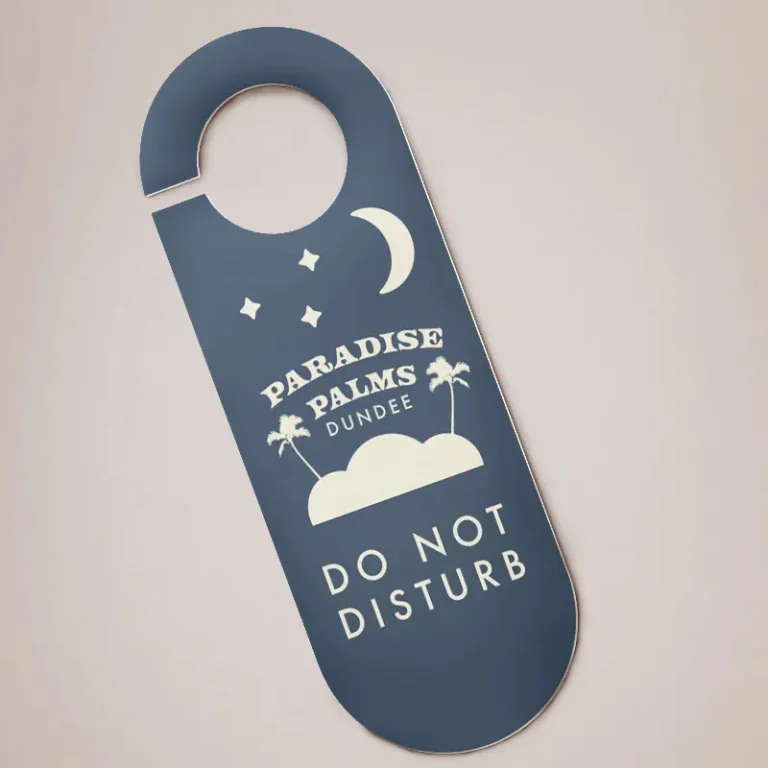
70 × 200 mm, rounded ends, 350gsm silk card, both sides
Hangers get read because they have to be taken off the handle. They suit the houses either side of a job and streets where letterboxes have 'no junk mail' signs.
Uncoated card takes biro and pencil without smudging, so you can write the price and the job reference in the customer's kitchen and leave a tidy, branded quote.
Each pack is a list of real products with the options shown, priced live and added up. There is no pack price: buying the lines separately costs exactly the same, and one delivery charge covers the basket.
Package 1
Street-by-street pack
For a one-van plumber working around current jobs: flyers for the surrounding streets and hangers for the houses either side.
2,500 flyers is roughly ten to twelve jobs' worth of surrounding streets at 200 to 250 doors per job.
Saver speed, about 8 working days for the slowest item. Prices are the live Saver prices for exactly these options. Order each item from its own page; one delivery charge covers the basket.
Hand a card to every customer, not only new ones: the card is what brings the repeat call.
Saver speed, about 6 working days for the slowest item. Prices are the live Saver prices for exactly these options. Order each item from its own page; one delivery charge covers the basket.
Drop the flyers in two waves four to six weeks apart to the same streets; most calls come after the second.
Saver speed, about 8 working days for the slowest item. Prices are the live Saver prices for exactly these options. Order each item from its own page; one delivery charge covers the basket.
Three layouts we drew for invented plumbing firms. They follow what works on a doormat: the phone number big enough to read from standing height, the area covered, and a short list of the jobs people actually call about.
These are sample designs we made to show layout and wording. The business names, numbers and addresses are invented.
Sample design
BBrooksidePlumbing and heating
Local plumber, AB1 and AB2
Leaks, taps, toilets and boilers
Fixed prices quoted before we start
Dripping taps and leaking pipes
Toilets that will not stop running
Outside taps and new radiators
Gas boiler repairs and servicing
Call 0161 496 0218
Sample design: invented business.
Front
Where we work
Anytown, Northfield, Westbury and villages within 8 miles
Call-outprice on the phone
HoursMon to Sat, 7.30 to 6
Pay bycard or bank transfer
Burst and leaking pipes
Blocked waste and toilets
New taps, showers and radiators
We tell you the price before we start, and we tidy up after ourselves.
Price before we start
0161 496 0218
brookside.example
Gas Safe registration no. 000000 (sample).
Back
Sample: Brookside Plumbing
DL flyer, both sides, 170gsm gloss
Front: the job list uses the customer's words (running toilet, dripping tap), not trade terms.
Back: the area by place name, not only postcode, plus hours and how to pay.
Only show a Gas Safe number if the business is registered; the sample number is invented.
Wording that suits a plumbing leaflet: plain, local and specific. Swap the bracketed parts and keep every promise one you can meet on a busy Monday.
Headlines
Dripping tap? Leaking pipe? Call a local plumber
Plumbing and heating in [town] and the villages around it
Know where your stopcock is before you need it
We are working in your road this week
Outside taps, new radiators, bathroom refits
Landlords: one number for leaks, toilets and voids
Body text
[Name] Plumbing is a [two]-van firm based in [area], fixing leaks, taps, toilets, radiators and boilers for homes within [8] miles. We give you the price on the phone or before we start, we turn up when we say, and we clean up before we leave. Call [number] or send a photo of the problem to [WhatsApp].
Most leaks get worse slowly, then all at once. If you can hear water running when every tap is off, or there is a damp patch under the bath or around the boiler, call us before it comes through the ceiling. We find the leak, show you what we found and tell you what it will cost to put right.
Calls to action
Call [number], Monday to Saturday
Send a photo of the problem to [WhatsApp number]
Keep this card: you will need it one day
If you charge for a call-out or the first hour, say so on the leaflet; a headline price that leaves out a fixed charge can mislead.
Put the town and village names you cover on the front. People do not know your postcode list.
Do not print '24 hour' unless someone really answers the phone at 3am.
When, where and how many
Plumbing demand follows the weather and the housing stock. Drop where you already work, in the weeks before the jobs arrive, and keep cards going into every customer's hand all year.
October to January is peak: frozen and burst pipes, boilers failing on the first cold mornings and leaks found when the heating goes on. Spring and summer are steadier, with bathroom refits and outside taps.
When to drop
Plan the biggest run for late September and October, so your card is in the drawer before the first frost. A second drop in January catches people who had a bad experience with whoever came out over Christmas.
Planned work such as bathroom taps, showers and outside taps books best from March to June, so a spring drop can lead with those.
How many
A one-van plumber usually does well with 200 to 300 doors round each job plus 1,000 to 2,500 a month across a target patch.
Where
Through doors in streets of similar age to houses you already work on, on handles either side of a live job, in the hand of every customer at the end of a visit, and in the racks of local letting agents, hardware shops and community centres that allow it.
Respect 'no junk mail' signs and local rules on handing out flyers in the street; some councils control distribution in designated areas.
What response to expect
Cold door drops for trades usually bring a few calls per thousand, sometimes nearer one in a hundred in streets next to recent jobs. The emergency card works on a longer clock: it may be months before the call comes, so ask every new caller where they found your number.
Paper, size and finish for plumbers
Plumbing leaflets get handled with wet or dirty hands, live in drawers and vans, and need to be readable in poor light. Choose weight and finish for the job each piece does.
Job
Size
Paper
Finish
Why
Door-drop flyers
DL or A5
170gsm gloss
None
Stiff enough not to crumple, bright for photos of finished bathrooms, low cost per door.
Emergency cards
A6
350gsm silk card
None or gloss front
Survives years in a drawer; gloss front wipes clean.
Door hangers
70 × 200 mm
350gsm silk card
None
Holds its shape on a handle in wind and drizzle.
Quote sheets
DL
300gsm smooth uncoated
None
Takes biro and pencil; coated stock smears.
Landlord leaflets
A4 folded to DL
170gsm silk
Roll fold
Room for a full service list; fits agents' DL racks.
Set the phone number at 24pt or larger on the front of flyers and cards. It is the one thing everyone needs to read, often without glasses.
Use real photos of your own finished work rather than stock images of chrome bathrooms; people check the van and the photos match.
Before you print: rules for plumbers
Plumbers' marketing is mostly general consumer law, with one firm rule for gas work. These are the points we see plumbers check before printing.
Gas work and the Gas Safe logo
By law, anyone working on gas appliances or fittings in a home must be on the Gas Safe Register. Only offer gas work such as boiler repairs or servicing if the business is registered, and use the Gas Safe logo and your registration number only in line with the Register's own rules.
If a leaflet mentions a price, make sure it does not leave out a fixed charge the customer will always pay, such as a call-out fee or minimum first hour. The CAP Code and consumer law treat a headline price that hides compulsory charges as misleading.
When a contract is agreed in the customer's home, the Consumer Contracts Regulations 2013 usually give a 14-day cancellation right and require you to give cancellation information. Emergency repairs the customer asks you to start straight away are treated differently, so check how this applies to your jobs.
Show logos such as WaterSafe, an approved-plumber scheme or a trade association only while you are a current member, and follow that body's rules on how the logo can be used.
Claims you can prove
'24 hour', 'fixed price' and 'no call-out charge' must be true every time. Unfair commercial practices rules, now in the Digital Markets, Competition and Consumers Act 2024, cover misleading claims and pressure tactics.
This is a printer's checklist, not legal advice. Check current guidance from the Gas Safe Register, your trade body or Trading Standards before you print.
Questions about leaflets for plumbers
What size leaflet is best for a plumber's door drop?
DL (99 × 210 mm) on 170gsm gloss is the usual choice. It goes through every letterbox flat, it is stiff enough to land well, and two sides give room for a job list on one side and the area you cover on the other. A5 suits a flyer with photos of finished bathrooms.
How many leaflets should a plumber drop?
A one-van plumber usually starts with 200 to 300 doors around each job plus 1,000 to 2,500 a month in a target patch. Repeating the same streets several times works better than covering a whole town once, because people recognise the name on the second or third drop.
Is a postcard or a flyer better for an emergency number?
A 350gsm A6 card. Thin flyers get recycled with the post, while a stiff card with useful stopcock advice on the back tends to go in a drawer and stay there. Use flyers to reach new streets and cards for every customer and every door you knock on.
Can I put the Gas Safe logo on my leaflets?
Only if your business is on the Gas Safe Register, and then in line with the Register's rules on using its logo and showing registration numbers. If you are not registered, do not offer gas work at all on the leaflet, including boiler repairs or servicing.
Should I print prices on a plumbing flyer?
Prices for fixed jobs, such as replacing a tap washer or fitting an outside tap, can help. Make sure any call-out fee or minimum charge is included or stated clearly next to the price, so the headline is not misleading.
Do door hangers work for plumbers?
They suit the houses either side of a live job and streets with 'no junk mail' signs, because a hanger on the handle reads like a note from someone nearby. Only say you are working in the road when you really are.
How quickly can I get plumbing leaflets printed?
Each product page shows the Saver working days and any faster speeds, plus delivery. Delivery is £7.95 per order to the UK mainland and free when the print reaches £100. Print the autumn run in September so it lands before the first frost.
Can you design the leaflet from my logo and job list?
Yes. Our Artwork and Design Service can set your logo, photos and wording into a flyer or card. Every upload is checked automatically for size, bleed and resolution, and File check (£4.99) adds a person reviewing your file before print.
Leaflets Printed uses essential cookies so the basket and checkout work. If you agree, Google Analytics cookies also tell us which pages help people find the right leaflet. Optional cookies stay off unless you switch them on. Cookie policy.