Extension flyers, project brochures, neighbour letters and site-board leave-behinds
Builders win most work from homeowners who can see a job going on nearby, so the print that pays is an A5 flyer on 170gsm silk for the streets round a live site and a short stapled brochure of finished projects to leave after a survey visit. This page covers what to print, live prices, ready packs, sample layouts, wording, drop timing and the consumer-law points to check before you print.
An extension or loft conversion is a big decision that people think about for a year or more before they ring anyone. A builder's leaflet is less about the phone ringing tomorrow and more about being the name they already know when they finally decide. The jobs below are the ones builders actually print for.
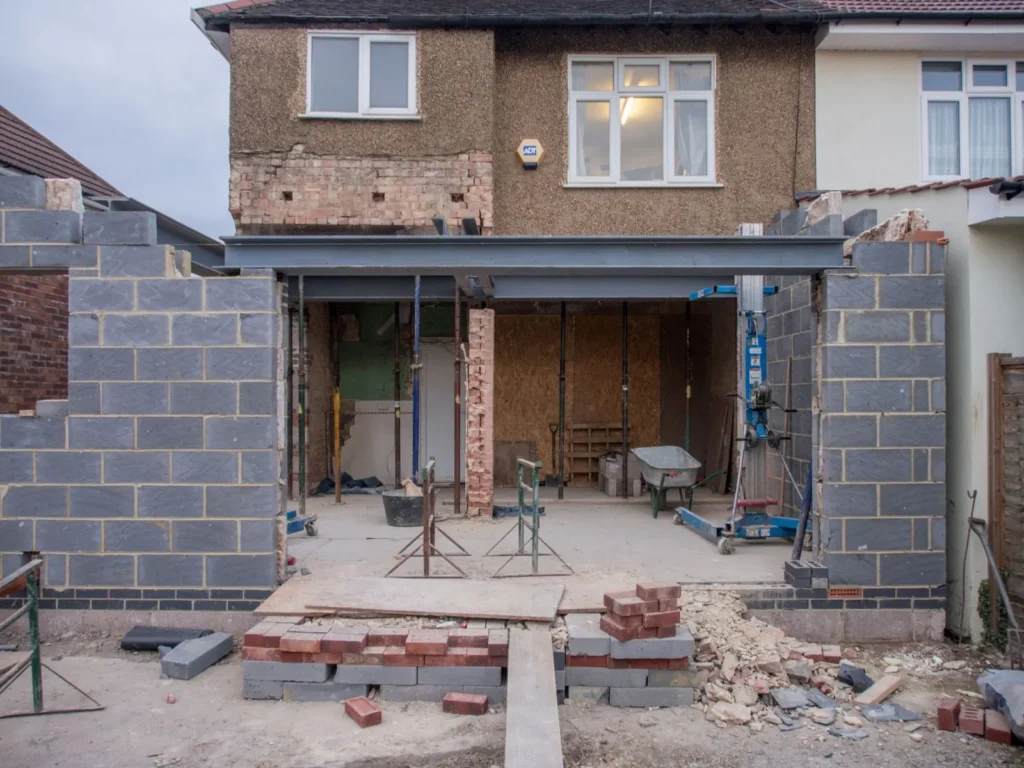
Streets round a live site
While a rear extension is going up, the neighbours walk past the skip every day and many of them have the same house with the same small kitchen. A drop of 300 to 500 flyers within a few streets reaches people who can see your work in progress.
Neighbour notice before you start
A short card through the doors either side and opposite: when the skip arrives, working hours, who to call about parking or dust. It heads off complaints and is often the first time a future customer sees your name.
Project brochure after a survey
A stapled A4 or A5 booklet of finished extensions, loft rooms and garage conversions, with the stages of a typical job and what you need from the client. Left on the kitchen table, it keeps you in the conversation while they gather other quotes.
Quote and survey folders
A printed sheet setting out how you price, what is included and what is a provisional sum, so the client can compare your quote line by line rather than on the bottom figure alone.
Planning and building control explainers
A folded leaflet that explains permitted development, planning applications and building regulations sign-off in plain words. Homeowners keep useful explainers, and they come back to the builder who gave it to them.
Estate agents and architects
A small stack of brochures left with local agents, architects and structural engineers who are asked 'do you know a good builder?' every week.
Site handover pack
A card at handover with guarantee details, what to do about snagging and a polite request to recommend you. Satisfied clients pass it to friends who are planning the same job.
Recommended leaflets for builders
What we would print for a building firm. The 'from' price is today's live price for the lowest-cost options; the example line shows a typical builder's order.
Twelve pages hold six to eight finished projects plus how you run a job. A heavier cover makes it feel like a proper document, not a leaflet, so it stays on the table.
Four A5 pages cover planning, building regulations, party wall notices and how long each stage takes, which is the information homeowners ask for at every first visit.
Plain uncoated paper takes pen and goes through an office printer, so you can print or write each client's figures on a branded sheet that lists what your price includes.
Each pack is a list of real products, priced live and added up line by line. There is no pack price: ordering the lines on their own costs exactly the same, and one delivery charge covers the basket.
Package 1
Live site pack
For a builder starting an extension: notice cards for the neighbours and flyers for the surrounding streets.
Use the cards on the dozen or so doors closest to the site and spread the flyers over three or four sites through the year.
Saver speed, about 6 working days for the slowest item. Prices are the live Saver prices for exactly these options. Order each item from its own page; one delivery charge covers the basket.
Fifty brochures suits a firm doing a few surveys a week; reprint when the photos of new projects are better than the old ones.
Saver speed, about 8 working days for the slowest item. Prices are the live Saver prices for exactly these options. Order each item from its own page; one delivery charge covers the basket.
Spread 5,000 flyers over two or three months in the streets with the house types you build for most, rather than one big drop.
Saver speed, about 7 working days for the slowest item. Prices are the live Saver prices for exactly these options. Order each item from its own page; one delivery charge covers the basket.
Three layouts we drew for invented building firms. Each leads with finished work, says plainly what the firm builds and gives the homeowner a next step that does not commit them to anything.
These are sample designs we made to show layout and wording. The business names, numbers and addresses are invented.
Sample design
OOakfieldBuild & Extend
Extensions in Anytown since 2009
More room without moving house
Single and double-storey extensions, loft rooms and garage conversions
Drawings and planning arranged
Building control sign-off handled
One site manager from start to finish
Free survey visit: 0161 496 0372
Sample design: invented business.
Front
How a job runs
Survey and written quote
Drawings, planning or permitted development
Build, with a weekly update
Sign-off and handover pack
Typical rear extension12 to 16 weeks on site
AreasAnytown and 10 miles around
See the extension we are building now at 12 Sample Street, and ask the owners how it is going.
0161 496 0372
oakfieldbuild.example
Sample design: invented business. Trade body logos only if a member.
Back
Sample: Oakfield Build & Extend
A5 flyer, both sides, 170gsm silk
Front: the promise in homeowner terms (more room), then the three worries people have: planning, building control and who is in charge.
Back: the stages of a job, a realistic time on site and a live job they can walk past.
Use your own photos in place of the tick list on the front if you have good ones; that is what sells an extension.
Book a survey and we will tell you whether your loft needs planning permission, what building control will ask for and roughly what it will cost.
0161 496 0641
redbrooklofts.example
Sample design: invented business.
RRedbrookLoft conversions
Planning a loft room? Start here
A plain guide to permission, regulations and timings
Outside: back and cover
Permission
Do I need planning?
Many rear dormers fall under permitted development. Front dormers, flats and conservation areas usually need an application. We check before you spend anything.
Regulations
Building control
Fire-safe stairs and doors
Floor strength and insulation
Sign-off certificate at the end
Inside
Sample: Redbrook Lofts planning explainer
A4 folded to A5, 4 pages, 170gsm silk
Cover: the question the homeowner is already asking, so the leaflet is kept as a reference.
Inside: one topic per page; wording stays general and tells readers to check their own case.
Keep planning statements cautious: permitted development rules change and depend on the house.
Wording for builders' leaflets: specific about the jobs you take on, honest about time on site, and short. Swap the bracketed parts.
Headlines
More room without moving house
Extensions, loft rooms and garage conversions in [town]
We are building at [address]: come and have a look
Thinking about an extension? Start with a survey
One builder from drawings to sign-off
Your kitchen, twice the size
Body text
[Name] Builders has been building extensions and loft conversions in [area] since [year]. We arrange the drawings and planning, deal with building control and keep one site manager on your job from the first footing to the final certificate. Book a survey and we will give you a written quote that lists what is included and what is not.
Most of the houses on [street] were built in the [1930s] with the same small back kitchen. We have extended [several] of them, and the photos inside show what that space can become. If you are thinking about it, ask the owners at [address], then call us for a survey.
Calls to action
Book a survey: [number]
Walk past our current job at [address]
Ask for our project brochure
Only show trade body or guarantee scheme logos while you are a member and follow that body's rules on using them.
State time on site as a range. People remember a promise of 12 weeks when it becomes 18.
Photos of your own finished jobs beat any stock image; take them in daylight before the client moves furniture in.
When, where and how many
Building work is planned months ahead. The aim is to be in front of people while they are thinking, not only when they are ready to sign, so keep a steady drip of print around every live site.
January to March is when households plan the year's big project and start getting quotes; September and October bring a second wave aiming to finish before the following summer. December is quiet.
When to drop
The best months are January to March, when people are planning and saving, and September to October. Time a drop round each live site in the first few weeks of the build, when the scaffold or footings are most visible.
Neighbour cards go out a week before the skip arrives, not on the day.
How many
A small firm usually does well with 300 to 500 flyers round each site plus 1,000 to 2,000 a quarter in streets with the house types it builds for most. Brochures are a short run: 50 at a time is plenty for most firms.
Where
Through doors near live sites, with brochures at estate agents, architects and structural engineers who refer work, at local home shows and on the table after every survey visit.
Respect 'no junk mail' signs and any council rules on handing out leaflets in the street.
What response to expect
Builders' flyers work slowly. A drop round a site might bring one or two survey requests per few hundred doors over the following months, sometimes none for a while and then several at once. Ask every enquiry where they heard of you, and note which sites and streets produce work.
Paper, size and finish for builders
Building clients are spending tens of thousands of pounds, and the print you leave says something about how carefully you work. Weight and finish should match what each piece does.
Job
Size
Paper
Finish
Why
Site-area flyers
A5
170gsm silk
None
Shows photos of finished work well and lands firmly on the mat.
Project brochures
A4 or A5 booklet
170gsm silk, 350gsm card cover
Matt cover lamination optional
Feels like a portfolio; a matt cover resists marks from site hands.
Neighbour cards
A6
350gsm silk card
None
Stiff enough to post cleanly and keep on a hall shelf.
Planning explainers
A4 folded to A5
170gsm silk
Half fold
Four tidy pages of reference information that people file.
Quote sheets
A4
120gsm smooth white
None
Takes pen and office printers for each client's figures.
If you print a 'typical cost' in a brochure, give it as a range with what it includes, and date the brochure so old figures are not taken as current.
Leave clear space on the back of flyers for the site address you hand-write when dropping round a job.
Before you print: rules for builders
Builders' marketing is covered by general consumer law rather than one regulator. These are the points we see building firms check before printing.
Cancellation rights for contracts agreed at home
When a contract is agreed in the customer's home, the Consumer Contracts Regulations 2013 usually give a 14-day cancellation period and require you to give the cancellation information in writing. Work started early at the customer's request has its own rules, so check how this fits your quotes.
Logos from trade associations or quality schemes such as TrustMark can only be used while you are a current member and in the way that body allows. Check your membership terms before the logo goes on a leaflet.
Any 'from' price, time on site or guarantee in a leaflet has to be accurate and not leave out conditions that change the deal. Photos should be of your own work. The CAP Code sets the rules for non-broadcast advertising.
Misleading claims and aggressive selling, such as invented deadlines or 'only a few slots left' when that is not true, are banned under the unfair commercial practices rules in the Digital Markets, Competition and Consumers Act 2024.
This is a printer's checklist, not legal advice. Check current guidance from Trading Standards or your trade body before you print.
Questions about leaflets for builders
What size leaflet works best for a builder?
A5 on 170gsm silk is the usual choice for door drops, because it gives room for two or three photos of finished extensions and a short list of the work you take on. For leaving after a survey, a stapled A4 or A5 brochure of past projects does a better job than any single flyer.
How many leaflets should a builder drop round a site?
Three hundred to five hundred doors within a few streets of a live job is a sensible start. Those neighbours can see the work in progress and often have the same house type. Repeat the drop round each new site rather than covering a whole town once.
Should I put prices on a building leaflet?
Most builders leave prices off flyers because every job differs. If you do give a typical cost, show a range, say what it includes and date the leaflet. A 'from' price that leaves out things most clients need could mislead.
What should a project brochure include?
Six to eight finished jobs with before and after photos, the stages of a typical project, realistic time on site, what you need from the client and how you price. Twelve A4 pages on 170gsm silk with a 350gsm matt laminated cover is a common format.
Do I need to warn neighbours before building work starts?
It is good practice and saves trouble. A short card a week before the skip arrives, with start date, working hours and a named contact, prevents most complaints. Party wall notices are separate legal notices and should not be replaced by a leaflet.
Can I use trade association logos on my flyers?
Only while you are a current member, and only in the way that body allows. Using a logo or scheme name you are not entitled to can mislead customers and break the scheme's rules.
How long does printing take?
Each product page shows the Saver working days and any faster speeds. Delivery is £7.95 per order to the UK mainland and free when the print reaches £100. Order brochures a few weeks before a home show or a busy survey period.
Can you design a builder's brochure from my photos?
Yes. Our Artwork and Design Service can lay out your photos and project notes into a flyer or brochure. Every upload gets an automatic check for size, bleed and resolution, and File check (£4.99) adds a person reviewing the file before print.
Leaflets Printed uses essential cookies so the basket and checkout work. If you agree, Google Analytics cookies also tell us which pages help people find the right leaflet. Optional cookies stay off unless you switch them on. Cookie policy.